Collection: Lepidolite

📖

Lepidolite — lilac mica, pearly layers and an aura of thoughtful transition

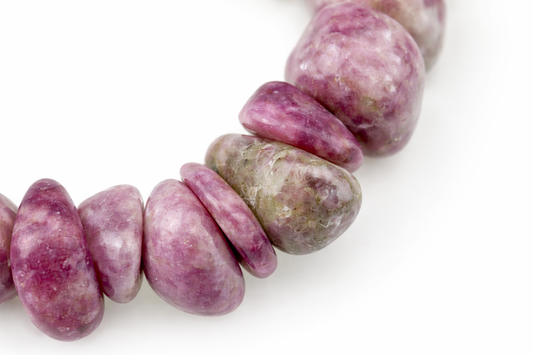
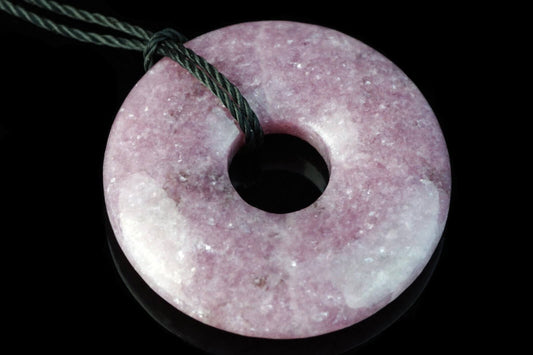
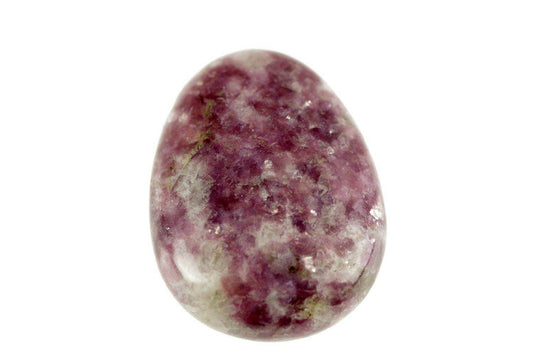
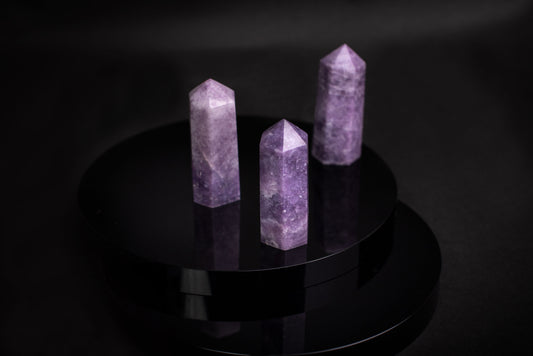
Lepidolite is the familiar name for lithium-rich trioctahedral micas within the polylithionite–trilithionite compositional series. It develops mainly in highly evolved granitic pegmatites, forming delicate books, overlapping scales, rosettes and lilac intergrowths with Quartz or feldspar. Manganese-bearing chemistry commonly contributes its lavender, rose and violet tones, while iron and surrounding minerals may soften them towards grey or silver.

✨ What makes Lepidolite special?

  • Crystal sheets arranged like pages: weak bonding between structural layers allows Lepidolite to separate into thin, flexible leaves with smooth pearly surfaces.
  • A marker of rare-element geology: it forms during the final concentrated stages of pegmatite evolution, often beside Quartz, albite, Tourmaline, Spodumene, Topaz and other lithium-bearing minerals.
  • Shimmer shaped by orientation: broad plates create continuous pearly reflections, while countless smaller scales produce a field of tiny moving highlights.

🔮 Lepidolite aura

  • Aura of thoughtful transition: Lepidolite may represent moving through change one manageable page, decision or practical action at a time.
  • Aura of layered understanding: its stacked sheets can serve as reminders that one situation may contain several valid levels of meaning without becoming contradictory.
  • Aura of flexible boundaries: thin mica leaves bend while retaining their structure, symbolising limits that can respond thoughtfully without disappearing.

💫 Lilac-page lore and care

“Lepidolite” is a useful series and field name rather than one narrowly fixed mineral species. Commercial material may be a delicate mica book, a mica-rich rock, a natural Lepidolite–Quartz composite or a resin-stabilised product, and these forms do not share identical durability. Lithium itself does not create the purple colour, and exact mica identification may require laboratory analysis.

Keep Lepidolite nearby when a complicated transition feels too large to understand all at once. Let its layered pages remind you that clarity may arrive gradually—and that strength sometimes comes not from becoming rigid, but from knowing what can bend while the essential structure remains.

Turn one page. Protect the structure. Let understanding unfold in layers.