Collection: Lapis lazuli

🌌

Lapis Lazuli — ultramarine depth, golden pyrite and an aura of thoughtful truth

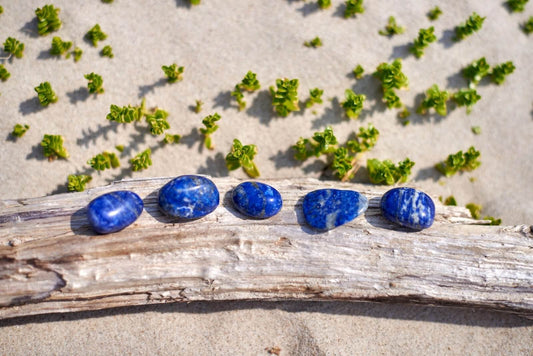
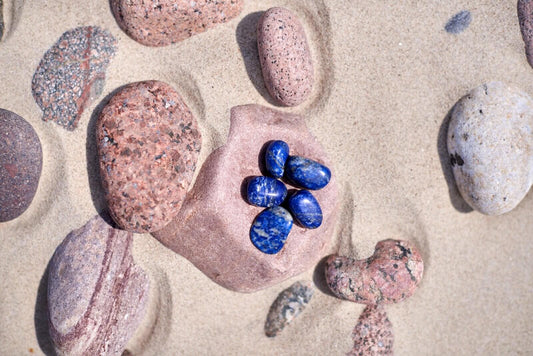
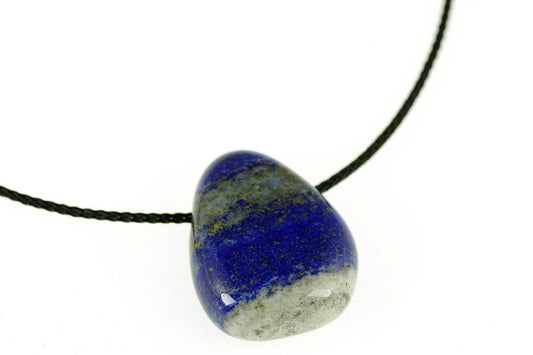
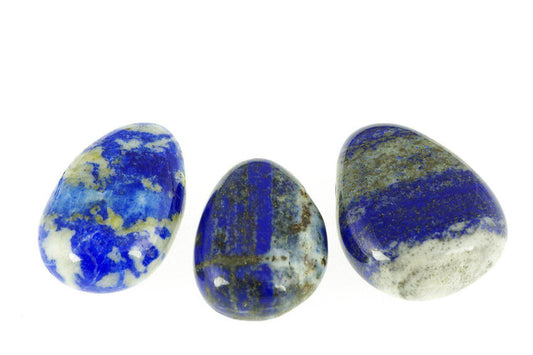
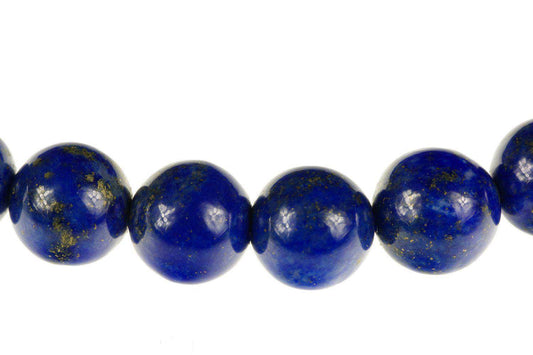
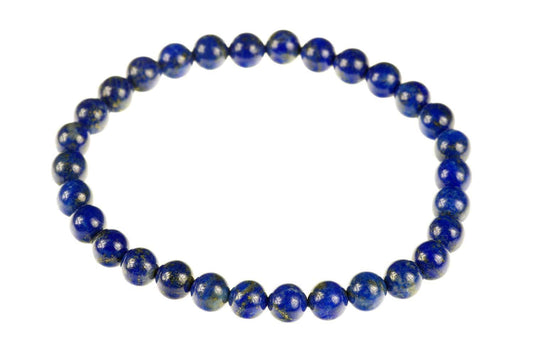
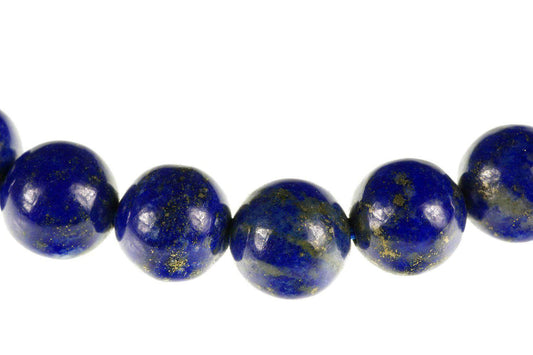
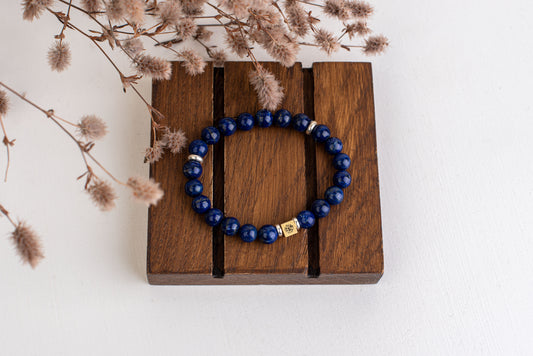
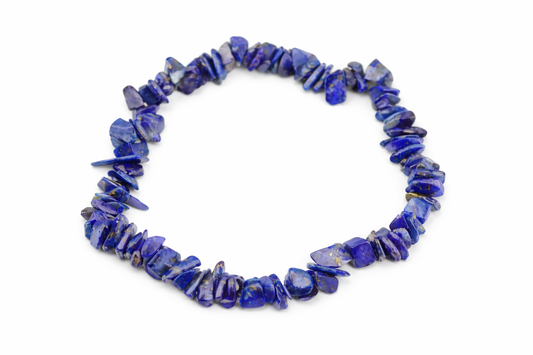
Lapis Lazuli is a deep-blue metamorphic ornamental rock rather than one mineral species. Its colour comes principally from lazurite-rich sodalite-group material, while white calcite, brassy pyrite and other minerals create clouds, veins, golden flecks and tonal changes. Each piece is therefore a natural meeting of unlike materials rather than a perfectly uniform field of blue.

✨ What makes Lapis Lazuli special?

  • Ultramarine created by sulfur: sulfur radical species held within lazurite’s crystal framework absorb and return light in a way that produces its celebrated intense blue.
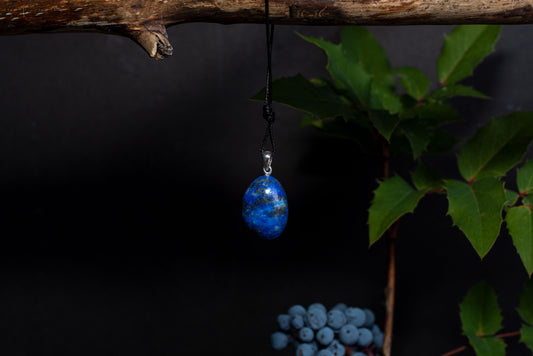
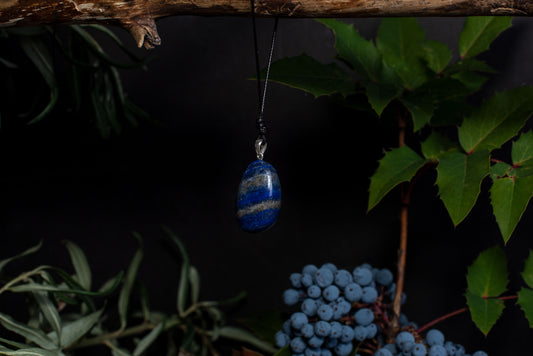
  • A miniature night sky: metallic pyrite may resemble distant golden stars, while calcite forms pale clouds, pathways and mountain-like veins.
  • A stone with an artistic afterlife: carefully purified blue material was historically ground into natural ultramarine, once among the most treasured pigments used in manuscripts and paintings.

🔮 Lapis Lazuli aura

  • Aura of thoughtful truth: Lapis Lazuli may represent separating honest observation from assumption before speaking or making an important decision.
  • Aura of disciplined learning: its long association with writing, art and scholarship can serve as a reminder that understanding deepens through curiosity, evidence and patient refinement.
  • Aura of clear expression: its blue expanse crossed by visible mineral lines may symbolise communicating directly while still recognising nuance, context and human complexity.

💫 Scribe-and-stars lore and care

Lapis Lazuli is the name of the complete rock, while Lazurite is its principal blue mineral. Visible pyrite is common but not required, and abundant golden flecks do not automatically indicate superior quality. Pale or porous material may be dyed, while wax or oil may be used to deepen colour and improve polish. Historic Badakhshan material is especially renowned, but locality should be supported by documentation rather than appearance alone.

Its mixed composition gives Lapis Lazuli a bulk hardness commonly around 5–5.5, with softer calcite-rich areas and variable porosity. Clean briefly with lukewarm water, mild soap and a soft cloth, testing an inconspicuous area first when treatment is uncertain. Avoid prolonged soaking, acids, solvents, abrasives, strong heat, steam and ultrasonic cleaning, as these may affect calcite, dye, wax, oil, fillings or repaired sections.

Keep Lapis Lazuli nearby when an important thought deserves more care before it becomes speech. Let its blue depth, pale mineral pathways and golden points remind you that truth is rarely one flat colour—it becomes clearer when observation, knowledge and compassion are allowed to meet.

Observe carefully. Refine the message. Speak what remains true.