Collection: Alum

❄️

Alum — icy geometry, practical history and crystal-growing wonder

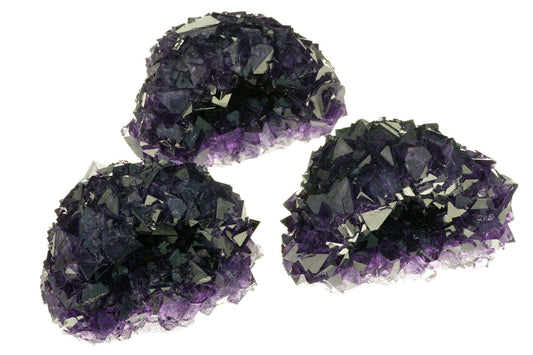
Alum most commonly refers to potassium alum, a hydrated double-sulfate salt admired for its clear to white appearance and elegant octahedral crystals. Unlike quartz, it is soft and readily soluble in water. Alum has a long practical history in crafts and traditional processes, while its orderly growth from warm, saturated solutions makes it especially fascinating for crystal experiments and educational displays.

✨ What makes Alum special?

  • Octahedral geometry: balanced growth commonly produces crystals enclosed by eight triangular faces.
  • Hydrated structure: water molecules occupy ordered positions within the crystal rather than existing as trapped droplets.
  • Solution-grown beauty: slow cooling and a clean, stable environment can create large, transparent crystals with smooth faces.

🔮 Symbolism and reflective meaning

  • Clarity and order: its precise geometry can serve as a reminder to organise thoughts and simplify complicated situations.
  • Patient transformation: often appreciated as an example of how gradual change can turn an invisible solution into visible structure.
  • Balanced development: its crystal form reflects steady conditions, sufficient space and growth allowed to unfold without haste.

💫 Did you know?

“Alum” describes a family of related double sulfates. Potassium alum and ammonium alum may look nearly identical, so composition should be confirmed from reliable labelling rather than appearance alone.

Alum is soft, brittle and water-soluble. Keep display crystals dry, avoid washing them and protect their delicate corners from impact. Only use alum for cosmetic, culinary or other specialised purposes when the exact composition and intended grade are clearly stated.

Keep Alum as a reminder that remarkable structures can emerge from simple ingredients when time, balance and the right conditions come together.

Clear form. Patient transformation.