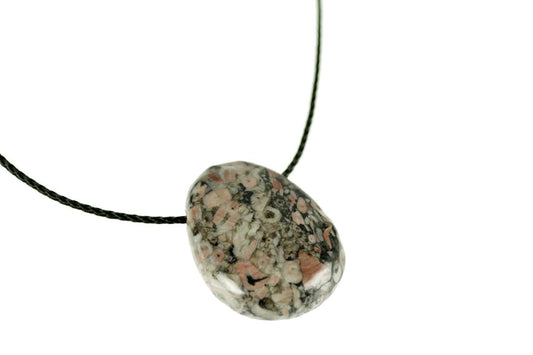
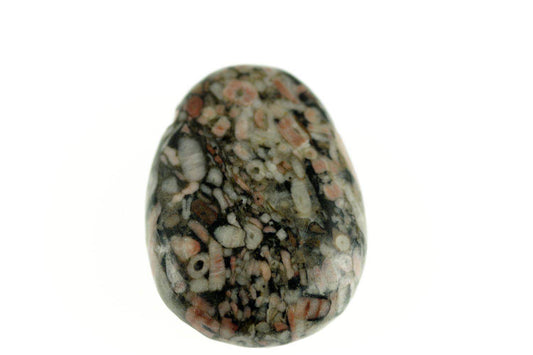
Collection: Crinoid

𓇼

Crinoid Fossil — stone sea lilies, ancient rhythm and magic carried through time

Crinoids are marine animals related to starfish and sea urchins, despite their flower-like nickname of “sea lilies”. Their bodies were built from many Calcite plates forming a cup, feathery feeding arms, a segmented stem and an anchoring holdfast. After death, these delicate structures usually separated, leaving the familiar discs, stars, rings and broken stem sections preserved throughout ancient marine limestone.

✨ What makes Crinoid Fossils special?

  • Stars inside ancient stems: the star-shaped or pentagonal centre visible in many discs is the fossilised canal that once passed through the living stem.
  • A puzzle made of many pieces: stems were assembled from stacked plates called columnals, which commonly separated and scattered across the seabed after death.
  • Entire seafloors turned to stone: some limestones contain such abundant Crinoid remains that polished surfaces become crowded with pale discs, rings and branching fragments.

🔮 Crinoid Fossil magic

  • Deep-time magic: Crinoid Fossils are often kept as reminders that a life may pass quickly while the patterns it creates continue far beyond it.
  • Small-parts enchantment: their stacked columnals can represent separate daily actions joining together until they form one steady and meaningful path.
  • Ancient-tide ritual: their starry centres may symbolise finding an inner line of direction while the surrounding world continues to shift like an ocean current.

💫 Sea-lily lore and care

Crinoids are not extinct. Stalked sea lilies still live mainly in deeper waters, while their unstalked relatives, feather stars, inhabit modern seas. Fossil pieces may preserve original Calcite or be replaced by silica or Pyrite, so appearance and durability vary considerably.

Most Calcite-rich Crinoid fossils are sensitive to acids and pressure on raised details. Dust them gently with a soft artist’s brush and avoid vinegar, soaking, harsh scrubbing, steam and ultrasonic cleaning. Silicified material may be tougher, while Pyrite-bearing specimens should be kept especially dry and stable.

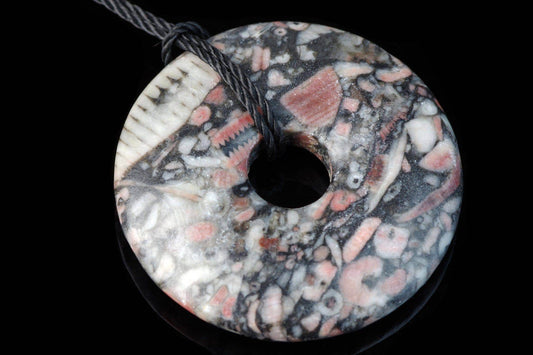
Keep a Crinoid Fossil nearby when your progress appears to consist only of small and separate moments. Let its ancient columnals remind you that individual pieces can become a structure, a life can become a story and one quiet pattern can survive an entire vanished sea.

Follow the ancient rhythm. Build one piece at a time.