Collection: Vesuvianite

🌿

Vesuvianite — metamorphic greens, volcanic names and an aura of purposeful transformation

Vesuvianite, also known as Idocrase, is a complex calcium-rich silicate most often recognised by its green, yellow, brown or yellow-green colours. It commonly forms prismatic crystals within skarns, where hot mineral-rich fluids from igneous activity transform surrounding limestone or other carbonate rock.

✨ What makes Vesuvianite special?

  • It is created through geological transformation: Vesuvianite develops where heat and chemically active fluids cause existing carbonate rocks to recrystallise into new minerals.
  • Its colours reveal subtle chemical changes: iron, chromium, manganese and copper can contribute green, yellow, brown, pink or rare blue tones.
  • Its crystals follow tetragonal symmetry: well-formed specimens may appear as glassy prisms or columns, although massive and finely granular material also occurs.
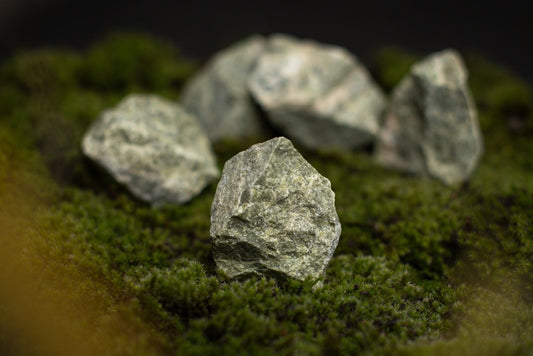
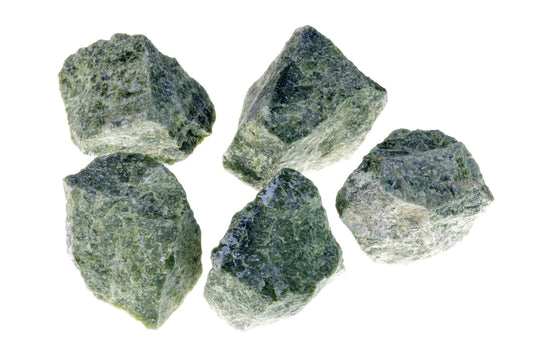
🔮 Vesuvianite aura

  • Aura of purposeful transformation: Vesuvianite may symbolise changing direction without losing sight of the deeper purpose guiding the journey.
  • Aura of creative release: its varied colours can represent moving beyond familiar patterns and allowing overlooked ideas to take a clearer form.
  • Aura of grounded possibility: its birth within transformed rock may remind us that meaningful change can remain practical, steady and firmly connected to reality.

🌋 A mineral with two memorable names

  • Vesuvianite was named after Mount Vesuvius in Italy.
  • Its alternate name, Idocrase, refers to a “mixture of forms.”
  • Green Californite can resemble jade at first glance.

Keep Vesuvianite nearby when change needs direction rather than haste. Let its formation within rocks reshaped by heat and mineral exchange remind you that transformation does not erase what came before—it can reorganise experience into something stronger, clearer and better prepared for the path ahead.

Transform with purpose. Give new ideas form. Keep possibility grounded.