Collection: Kyanite

🗡️

Kyanite — pressure-born blades, changing blue and an aura of clear direction

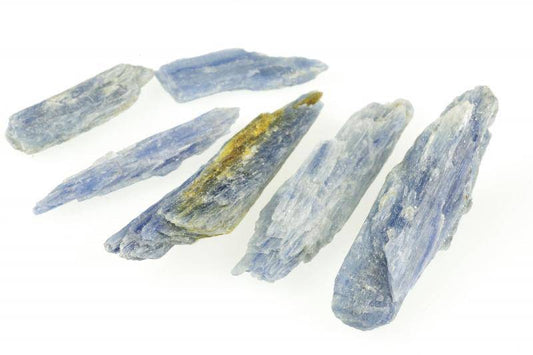
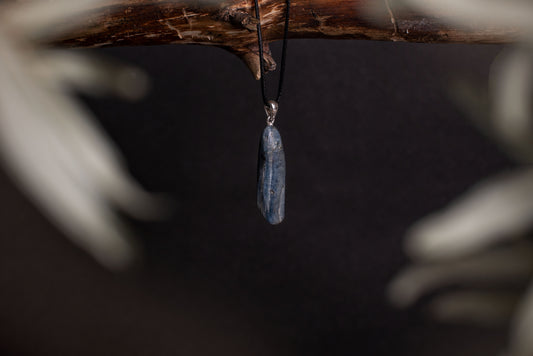
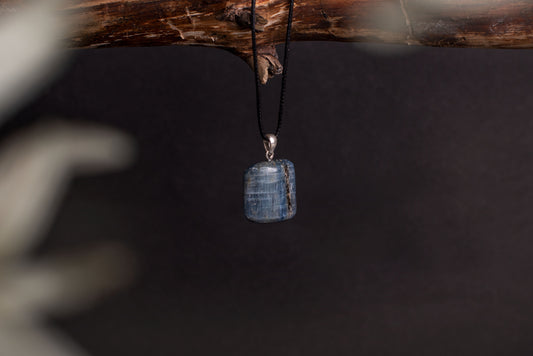
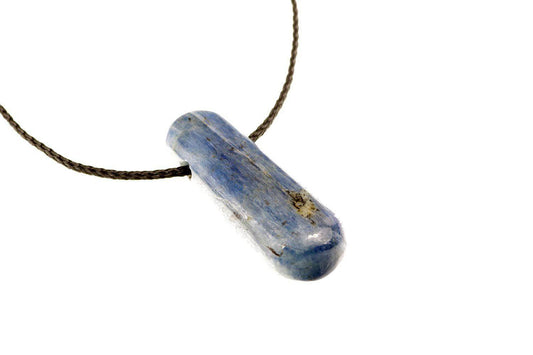
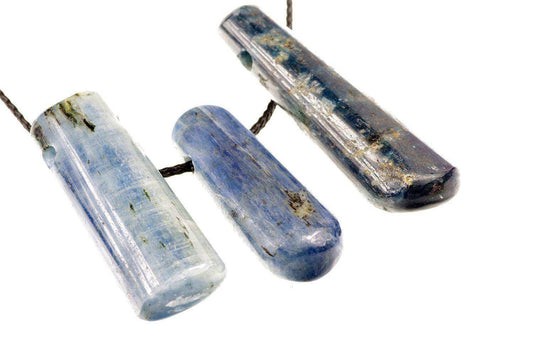
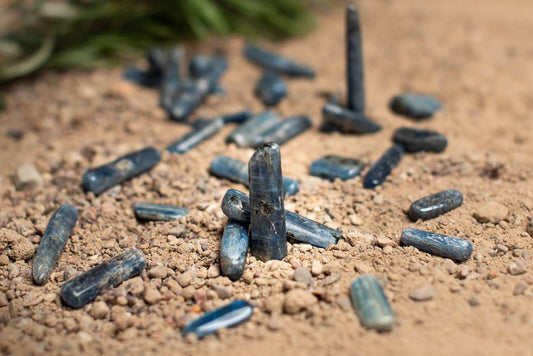
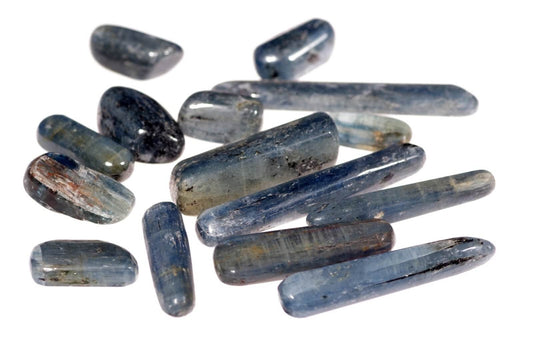
Kyanite is a bladed aluminium silicate formed mainly during high-pressure metamorphism. Best known in cornflower, indigo and silver-blue, it may also appear green, grey, white, black, colourless and occasionally orange. Its long striated crystals preserve both the intense geological conditions of their formation and one of mineralogy’s most remarkable directional properties.

✨ What makes Kyanite special?

  • Its hardness changes with direction: Kyanite is approximately 4.5–5.5 along the length of a blade but about 6.5–7 across it, so one crystal may behave as both a softer and harder material.
  • Pressure is written into its identity: it shares the formula Al2SiO5 with Andalusite and Sillimanite, yet its atomic structure is the form favoured under comparatively elevated pressure.
  • Colour moves with orientation: blue crystals may show paler, deeper or blue-green tones from different viewing directions, while bands and striations strengthen their blade-like appearance.

🔮 Kyanite aura

  • Aura of clear direction: its long blades may represent identifying the path that matters most and allowing less useful distractions to fall away.
  • Aura of composure under pressure: its metamorphic origin can serve as a reminder that demanding circumstances may reveal structure, priorities and capabilities that were previously hidden.
  • Aura of flexible strength: its contrasting hardness directions may symbolise knowing when firmness is necessary and when a gentler approach will protect what matters.

💫 Pressure-blade lore and care

Kyanite is a distinct mineral species, not a variety of Sapphire, although transparent blue stones may appear similar at first glance. Black Kyanite is the same species in dark bladed or radiating form, often with graphite and other inclusions. Colour, mine origin, treatment and the composition of Kyanite-bearing ornamental rock should each be assessed separately.

Despite its harder cross-direction, Kyanite is brittle and has strong cleavage, so blades, thin edges and drill holes may split under impact or setting pressure. Clean briefly with lukewarm water, mild soap and a soft cloth or very soft brush, then dry thoroughly. Avoid steam, ultrasonic cleaning, prolonged soaking, strong chemicals, rapid temperature changes and pressure on individual blades, especially when fractures, resin, dye, backing, glue or repairs may be present.

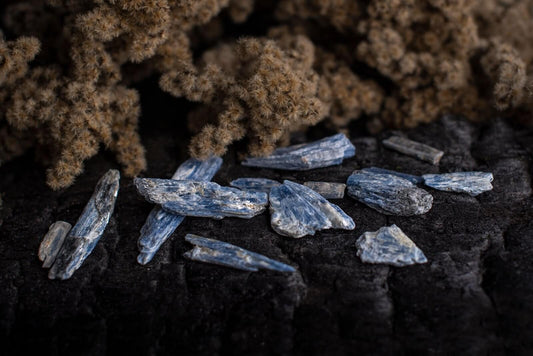
Keep Kyanite nearby when pressure makes every direction feel equally urgent. Let its aligned blades remind you that strength is not expressed in only one way—and that clarity often begins by choosing where firmness belongs and where gentleness will carry you further.

Find the direction. Respect the pressure. Move with clear intention.