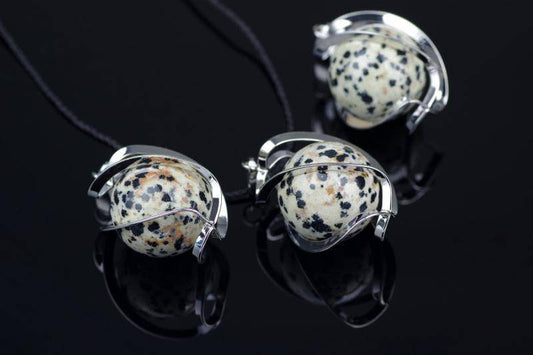
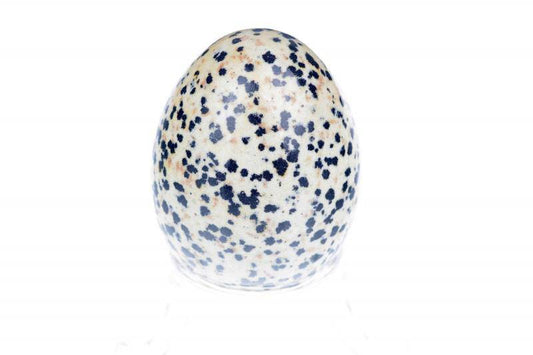
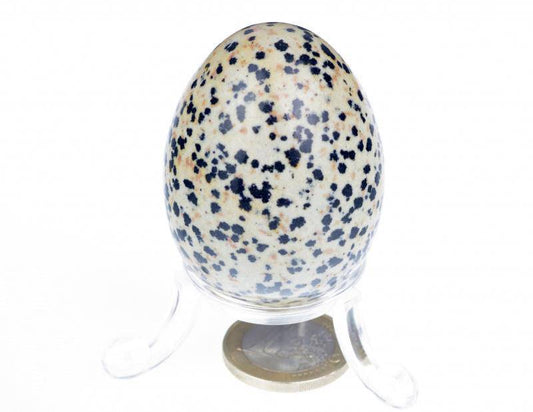
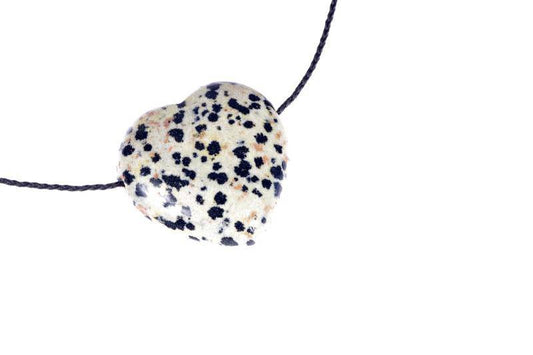
Collection: Dalmatian jasper

🐾

Dalmatian Jasper — natural spots, igneous rhythm and an aura of playful confidence

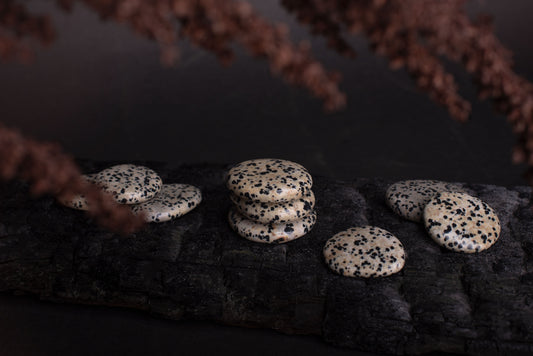
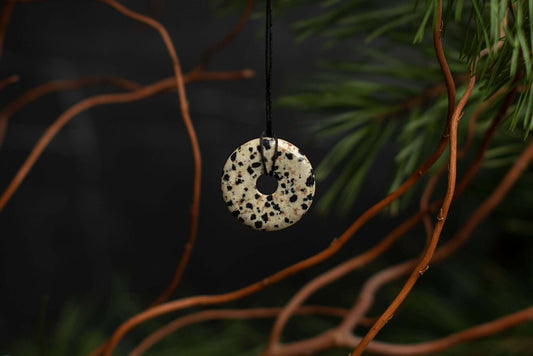
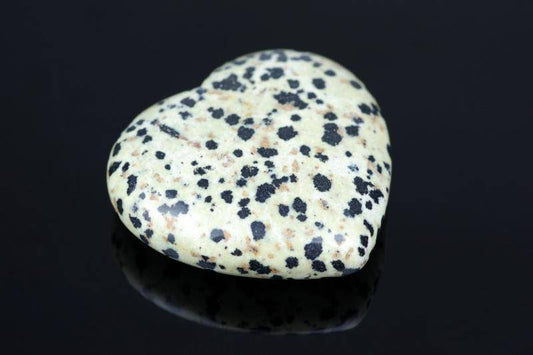
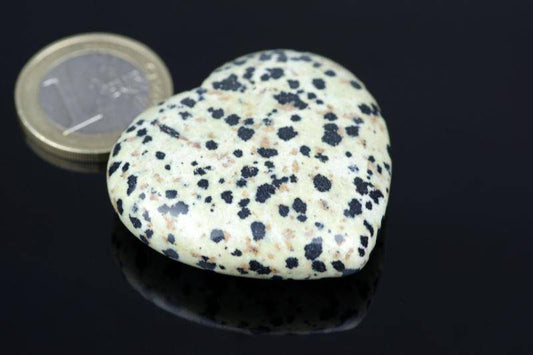
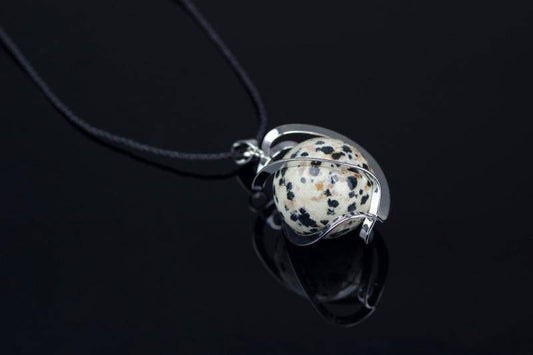
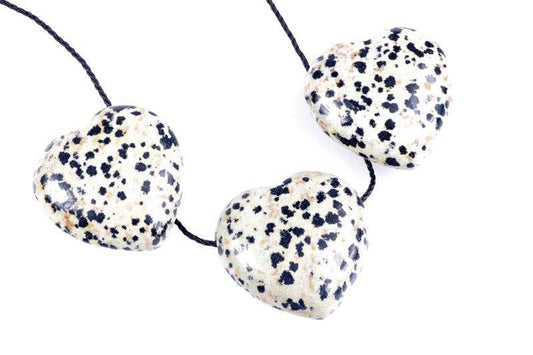
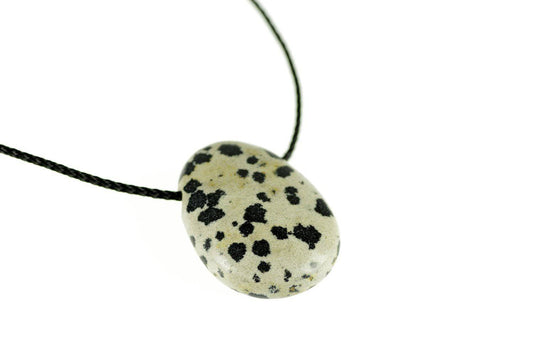
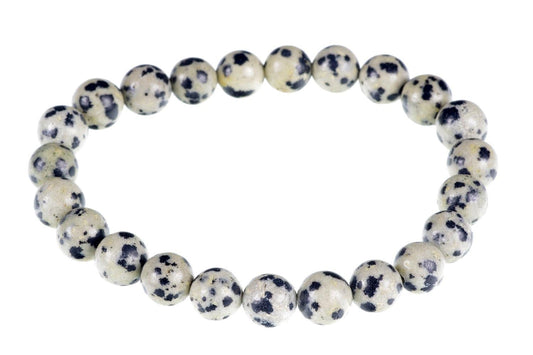
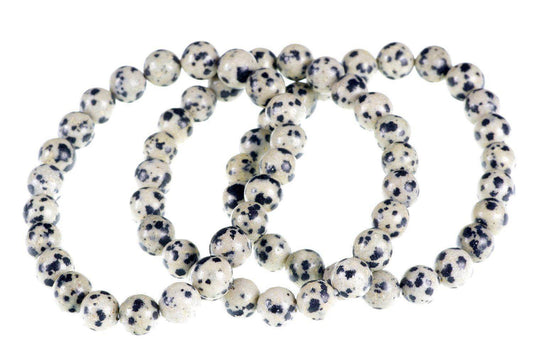
Dalmatian Jasper, also called Dalmatian Stone, is a cream-to-tan igneous rock patterned with black, charcoal and occasional rust-coloured marks. Despite its familiar trade name, it is not true silica-rich Jasper. Its pale ground is dominated by alkali feldspar, while many of the dark spots are formed by arfvedsonite-rich amphibole crystals, with minor Quartz and iron-bearing minerals sometimes present.

✨ What makes Dalmatian Jasper special?

  • Spots grown inside the rock: the dark marks are three-dimensional mineral grains whose cross-sections become dots, ovals, commas and short streaks when cut.
  • Every surface reveals a new pattern: two slices from the same block may show very different spot sizes, spacing and visual rhythm.
  • Graphic yet naturally irregular: its restrained cream-and-black palette creates strong contrast without the repeated perfection expected from printed or moulded imitation.

🔮 Dalmatian Jasper aura

  • Aura of playful confidence: Dalmatian Jasper may represent approaching serious responsibilities without losing curiosity, humour or a sense of discovery.
  • Aura of joyful individuality: its scattered markings can serve as a reminder that character often emerges through variation rather than perfect repetition.
  • Aura of grounded companionship: its warm, familiar pattern is often kept as a symbol of loyalty, shared adventures and the comfort of dependable connection.

💫 Speckled-stone lore and care

“Dalmatian Jasper” is a widely recognised trade name rather than a precise mineral classification. Classic material is strongly associated with Chihuahua, Mexico, but appearance alone cannot prove locality. Bright blue, teal, pink or purple pieces are usually dyed, while claims that the black spots are Tourmaline should be treated cautiously—the dark grains in classic material are commonly arfvedsonite-rich amphibole.

Dalmatian Stone is approximately 6–6.5 on the Mohs scale and generally polishes well, although edges may chip along boundaries between different mineral grains. Clean it briefly with lukewarm water, mild soap and a soft cloth or brush, then dry thoroughly. Avoid bleach, acids, solvents, abrasive powders, strong heat, steam and ultrasonic cleaning, especially for dyed, fractured, filled, glued or visibly pitted pieces.

Keep Dalmatian Jasper nearby when the path needs both steadiness and a little more joy. Let its naturally scattered pattern remind you that life does not need perfect symmetry to feel complete—sometimes warmth, character and possibility begin with the unexpected marks.

Stay grounded. Keep the curiosity. Follow the unexpected pattern.