Collection: Brachiopoda

🐚

Brachiopoda — ancient sea lamps, paired shells and deep-time memory

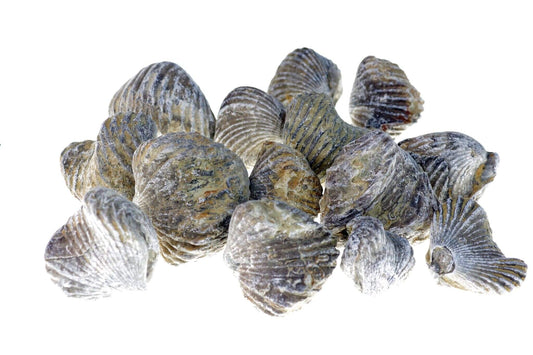
Brachiopods, traditionally called lamp shells, are exclusively marine animals whose history reaches back more than 500 million years. Although their paired shells may resemble those of clams, Brachiopods are not molluscs: their valves lie above and below the body, and they feed using a crown of ciliated tentacles called a lophophore. Their fossils preserve vanished seafloors in forms ranging from smooth ovals to ribbed fans, wing-like shells and spiny structures.

✨ What makes Brachiopoda special?

  • More than half a billion years: Brachiopods first appeared during the Cambrian and became major inhabitants of ancient Palaeozoic seas.
  • Two unequal valves: each valve is usually symmetrical through its own centre, helping distinguish Brachiopods from most bivalve molluscs.
  • Windows into lost oceans: shell shape, preservation and surrounding rock can reveal clues about ancient currents, sediment and marine environments.

🔮 Brachiopoda fossil magic

  • Deep-time magic: a shell carried across geological eras can place today’s difficulty within a much larger story without making the present unimportant.
  • Filtering enchantment: the lophophore gathered useful particles from moving water, inspiring the practice of separating nourishing information from surrounding noise.
  • Hinge-of-agreement magic: two different valves meeting along one boundary can represent distinct needs working together without becoming identical.

💫 Ancient-sea lore and care

Brachiopods are not merely creatures of the past. Living representatives still inhabit modern oceans, although their fossil record is especially famous for the enormous variety and abundance reached between the Ordovician and Permian periods.

Support a fossil by its strongest surrounding matrix and remove dust with a very soft, dry brush. Avoid vinegar, acids, steam, ultrasonic cleaning and prolonged soaking. Shale, repaired or pyrite-bearing specimens may be particularly sensitive to moisture and should be kept dry and stable.

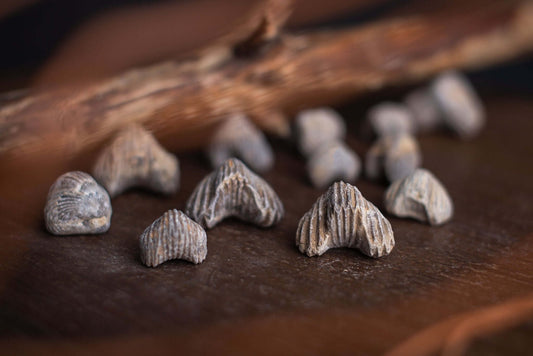
Keep a Brachiopod fossil nearby as a small archive of an ocean that disappeared long ago. Let its growth lines and enduring hinge remind you that continuity is not stillness—it is the art of preserving what matters while the world around it changes.

Filter the noise. Remember the deeper tide.