💫 Lightning-path lore and care
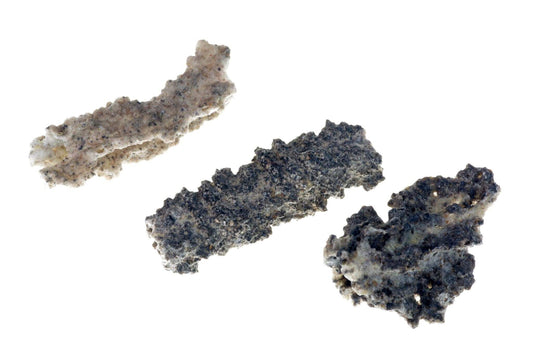
Fulgurite is often called “fossilised lightning”, but the phrase is poetic rather than literal: it forms through melting and rapid cooling, not fossilisation. It also does not retain the lightning’s electrical charge. Natural specimens should be distinguished from high-voltage laboratory creations through structure, substrate and reliable provenance.
Glass-rich areas may approach Mohs 5.5–7, yet the complete object can be exceptionally fragile because its walls are thin, porous and fractured. Support it from beneath, keep branches immobilised in a padded box and remove dust only with an extremely soft brush. Avoid washing, bending, compressed air, acids, steam, ultrasonic cleaning and attempts to remove sand or natural infill. Do not cut or grind it, as broken glass can be sharp and silica-rich dust should not be inhaled.