Collection: Silicon

💻

Silicon — crystal logic, elemental structure and an aura of inventive precision

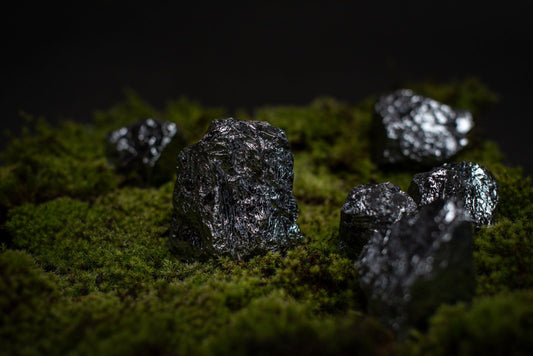
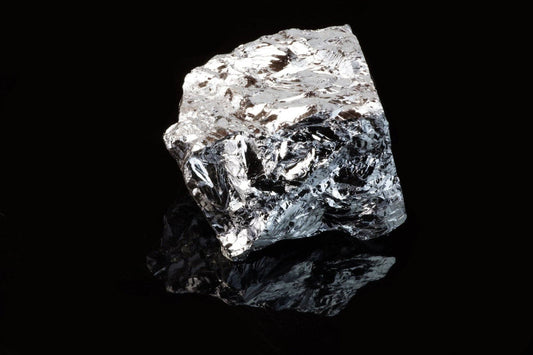
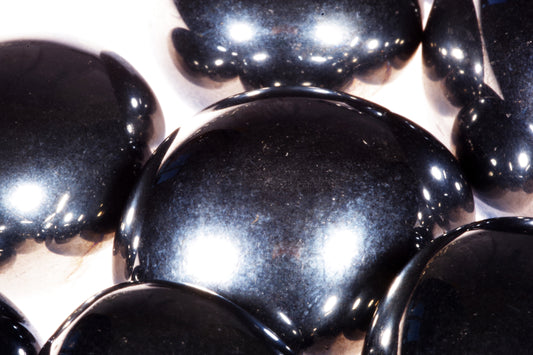
Silicon is the chemical element Si, atomic number 14, and a hard, brittle semiconductor with a dark steel-grey surface. Natural elemental Silicon is exceptionally rare; most of Earth’s Silicon is chemically bound within Quartz, Feldspar, clay and other silica or silicate minerals, while collector specimens are generally refined industrial material.

✨ What makes Silicon special?

  • Its atoms build a three-dimensional crystal network: each atom forms four tetrahedrally arranged covalent bonds within the diamond-cubic structure.
  • Its conductivity can be carefully adjusted: tiny additions of Boron, Phosphorus or related dopants create the controlled electrical behaviour required by semiconductor devices.
  • Its stable oxide helped transform technology: a precisely managed Silicon–Silicon dioxide interface became fundamental to modern transistors, integrated circuits and microchips.
🔮 Silicon aura

  • Aura of inventive precision: Silicon may represent refining a bold idea until it becomes clear, structured and practically useful.
  • Aura of adaptable intelligence: its tunable conductivity can serve as a reminder that small, thoughtful adjustments may produce profound changes in performance.
  • Aura of connected creation: its tetrahedral network may symbolise many simple relationships joining to support a far more capable system.

⚙️ What else makes Silicon fascinating?

  • Stone and computation share the same element: Silicon helps build much of Earth’s rocky crust and, when purified, becomes the foundation of countless electronic devices.
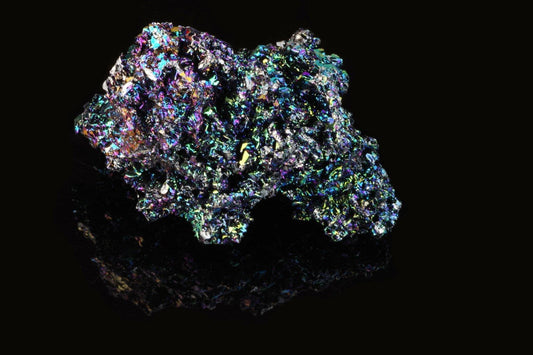
  • A wafer’s rainbow is usually a surface effect: blue, violet, rose and gold colours often come from thin-film interference in oxide or nitride coatings rather than Silicon’s body colour.
  • Silicon is not silicone: Silicon is an element, while silicone is a family of flexible synthetic polymers containing Silicon, Oxygen and organic groups.

Keep Silicon nearby when imagination needs enough structure to become technology. Let its ordered atomic network remind you that remarkable systems may begin with simple connections—then grow through careful design, patient testing and countless precise improvements.

Structure the idea. Refine the connection. Let inventive precision turn possibility into working reality.