Collection: Muscovite

📖

Muscovite — pearly pages, flexible light and an aura of reflective clarity

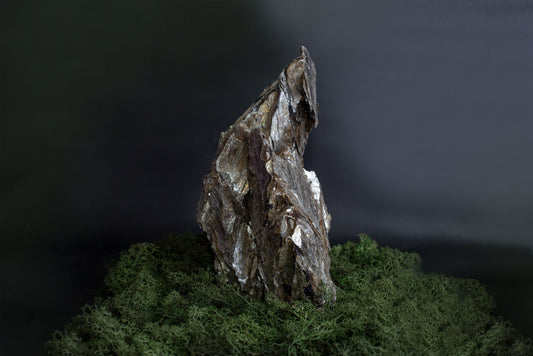
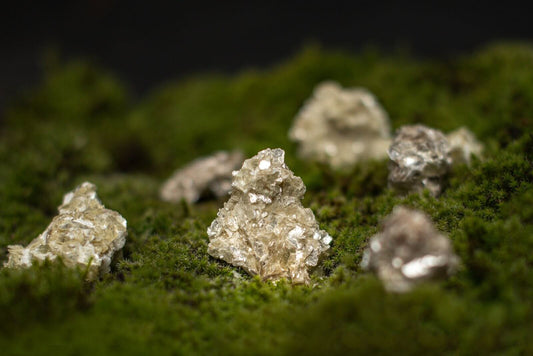
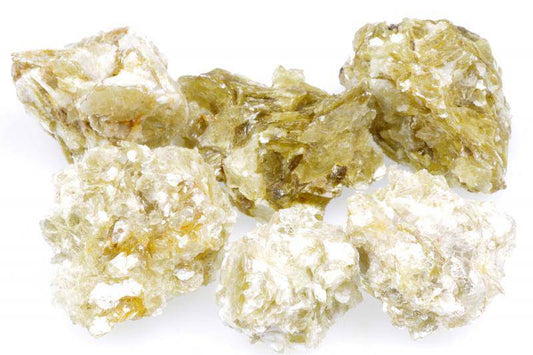
Muscovite is a pale, potassium-rich member of the mica group, commonly found in granites, pegmatites and metamorphic rocks. Its layered crystal structure allows large “books” to separate into exceptionally thin, transparent and elastic leaves with silver, pearl, pale gold or softly coloured reflections.

✨ What makes Muscovite special?

  • Its crystals resemble natural books: stacked sheets form plates, rosettes and thick layered specimens whose edges appear like hundreds of mineral pages.
  • Thin leaves bend and return: strong bonding within each layer and weaker bonding between layers create Muscovite’s perfect cleavage and remarkable elasticity.
  • It records pressure within rocks: aligned microscopic flakes give schist and phyllite their sheen while preserving clues about deformation and metamorphism.
🔮 Muscovite aura

  • Aura of reflective clarity: Muscovite may represent looking beyond the brightest surface reflection to understand the structure beneath it.
  • Aura of flexible strength: its elastic sheets can serve as reminders that adapting to pressure does not always require abandoning one’s essential form.
  • Aura of layered insight: its page-like structure may symbolise understanding a complex story gradually, one observation and one honest layer at a time.

🪟 Muscovy glass and mineral windows

The name comes from “Muscovy glass”, transparent mica sheets once exported from Russia for windows, lanterns and heat-resistant viewing panels.

Its electrical insulation later made Muscovite useful in telegraphy, capacitors, heating appliances and early electronic equipment.

Keep Muscovite nearby when a situation contains more layers than its first appearance suggests. Let its transparent pages remind you that clarity can remain flexible—and that each carefully examined layer may reveal another part of the larger structure.

Look beyond the reflection. Turn the next page. Let clarity remain flexible.